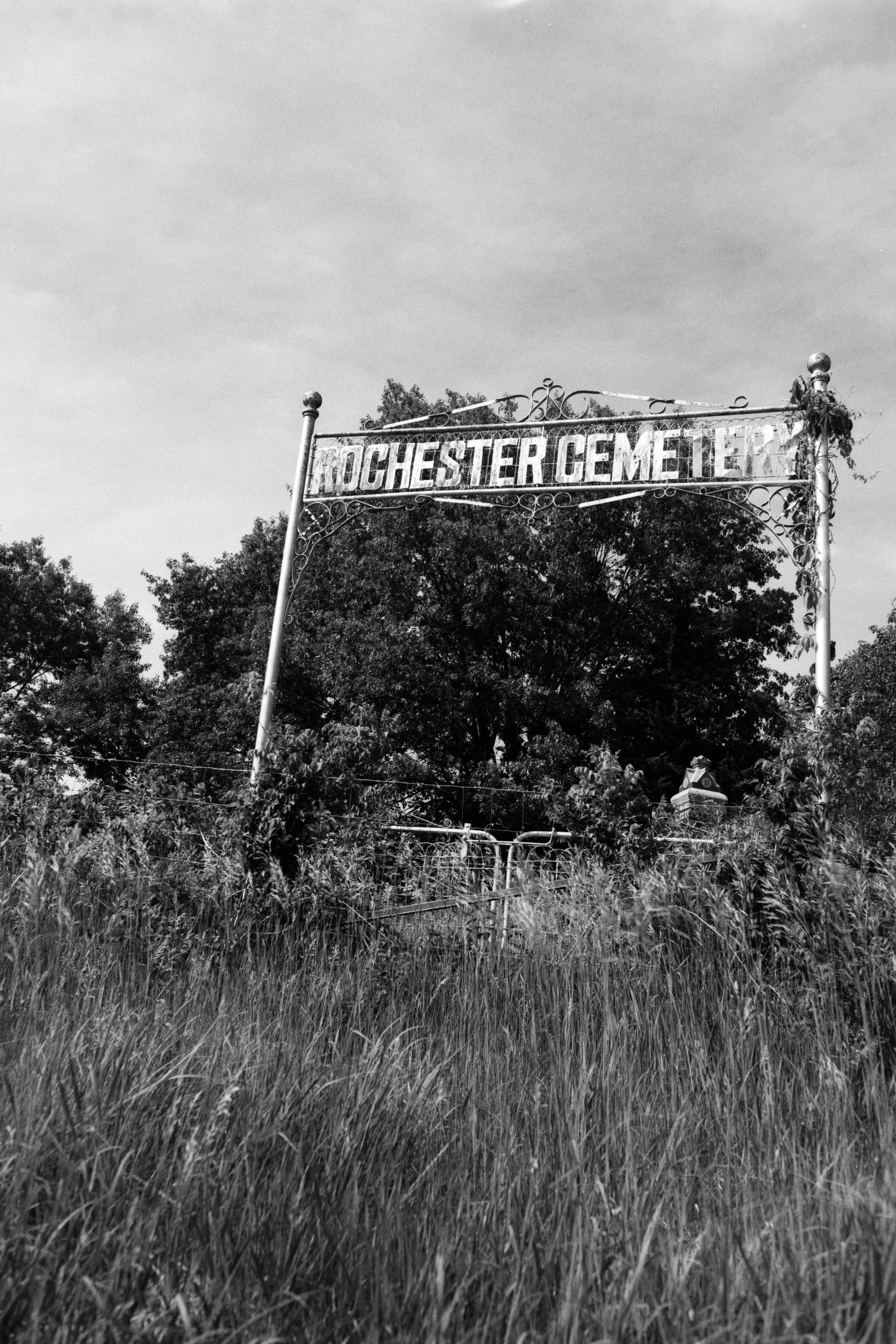
The entrance to the east side of Rochester Cemetery
Rochester Cemetery is a cemetery that is very much alive. Residents of Rochester, Iowa, still occasionally continue to bury people there; however, it’s also home to an atypical assortment of flowers, grasses, and trees. Oak trees whose immense sizes exude a wisdom that can only be acquired throughout multiple lifespans provide shade for woodland plants that ring their canopies. Prairie flowers and grasses shy away from the trees and stretch to the sunlight that warms the gaps between their branches. Neatly mowed paths keep this seemingly unruly green mass at bay, away from memorials with names of the dead who are still visited by the breathing. Venture off the mowed paths, and you will find hidden graves, old ones. Headstones carved from soft, local limestone or dolomite that bear only traces of lettering or none at all. Names and stories that have been forgotten, and stone slates that have been wiped clean by 150 years of Iowa weather. Vines wrap around them, pulling downwards while reaching upwards, and perennial flowers stand year after year, while those laid intentionally by mourners last for only a few weeks.
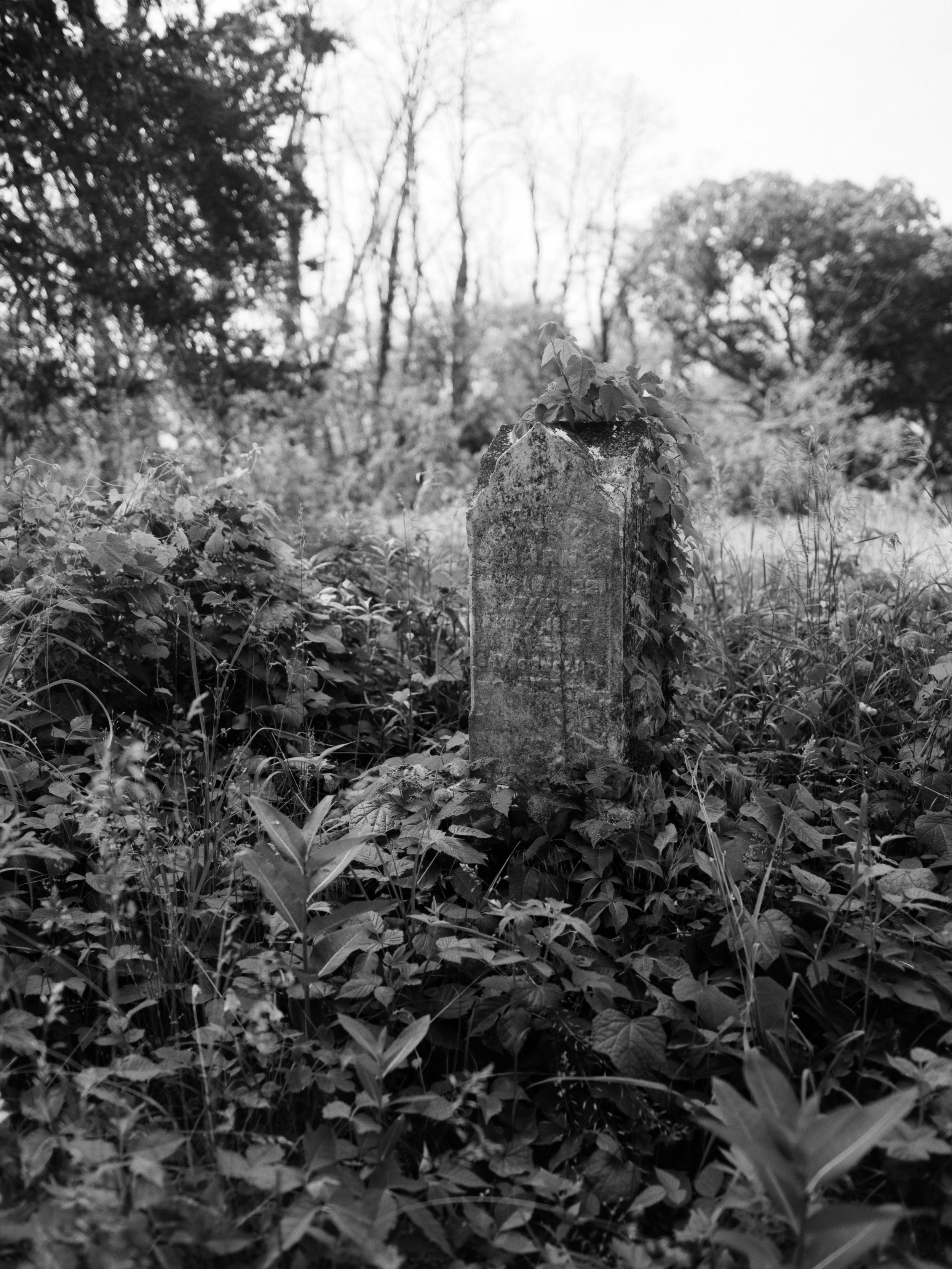
A gravestone with an unreadable name but readable date (1822-1887)
This place has stuck with me in a way that few others have. I visited Rochester Cemetery only once as a kid, and my memory of it lingered long enough to persuade me to return around 10 years later. Since then, I’ve continued to visit whenever I’ve had the chance. It hasn’t been until now, though, that I’ve felt I can articulate why Rochester Cemetery has kept me coming back. It’s a place full of contradictions, irony, and juxtaposition, and a place that is brimming with as much natural history as human history.
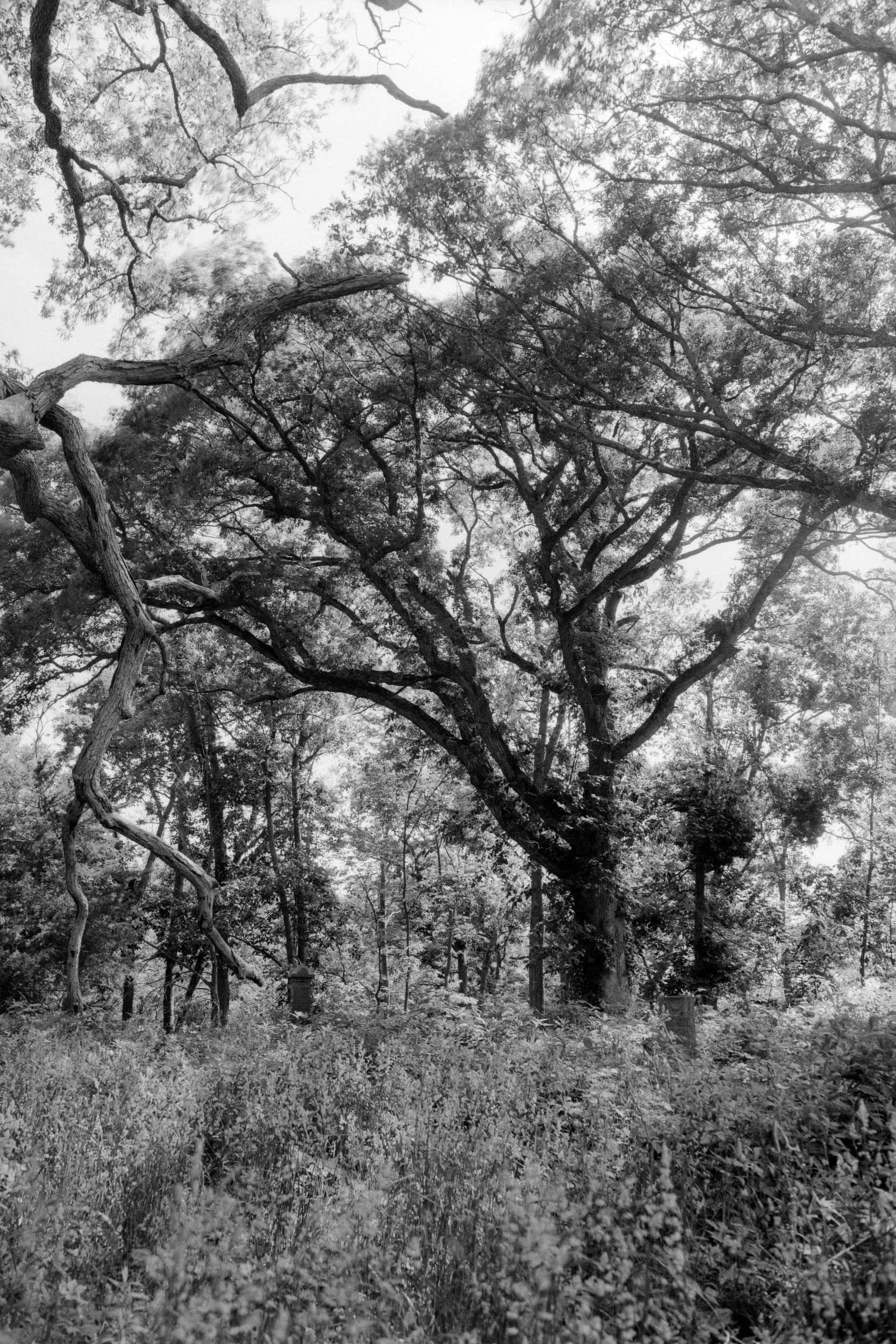
Spot the gravestones
Those nameless and forgotten headstones, hidden amongst the vegetation, belong to people who saw a version of our state that would be unrecognizable to its current inhabitants. Around 200 years ago, seemingly endless grasslands would have stretched in every direction, occupied by bison and elk. Red light from prairie fires would have melded with red light from the setting sun along a late-summer horizon. These fires would run to the edges of clear and cool prairie streams, flowing determinedly towards clear and cool rivers that eventually fed the Mississippi. The scattered forests in this part of what is now Eastern Iowa would have been home to a diverse assortment of massive old-growth trees, as well as wolves and bears. Indigenous people have lived here since time immemorial, calculatedly burning the grasslands and the woodlands, maintaining reciprocity with the land.
Lewis and Clark’s expedition reached what is now Iowa in the early 1800s, and within about 50 years, the last organized indigenous tribes had been forcibly dispossessed of land and treatied outside of state lines. Early colonists, like those blank headstones at Rochester Cemetery, came to Iowa with steel plows. They lacerated the earth, turning over prairie soil that had been curated by thousands of years of applied fire. Pre-colonization, about 86% of the land in Iowa was tallgrass prairie, and about 86% of the land in Iowa today is used for agriculture. There are no more wolves, bears, bison, or elk. There are no more prairie fires that run for miles, only stopped by haphazard waterways. Our forests are no longer home to ash and elm trees with canopies as demanding as any oak.
Only about 0.01% of the prairie that Iowa contained 150 years ago is left today. The tiny fragments that are left weren’t preserved for any altruistic reason, but simply because they were unfarmable. Sandy hills, rocky cliffs, and wet depressions are home to many of the small patches of remnant (historically-untilled) prairie that are left. Much of the rest of our remnant prairie exists in the margins of human development: railroad or powerline right-of-ways, roadside ditches, propane tank storage yards, and cemeteries.
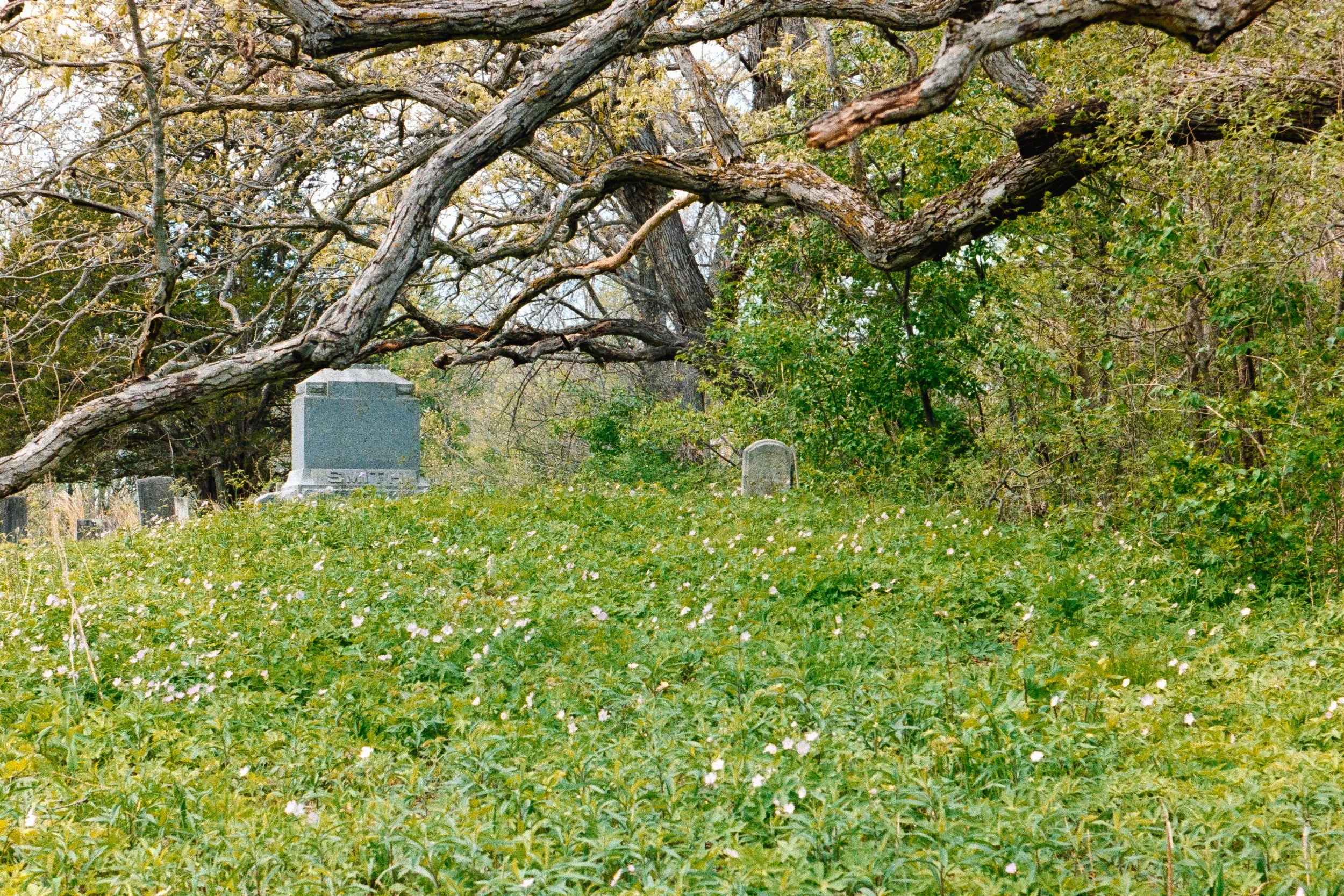
Geraniums blooming under an oak tree in late April
Rochester Cemetery is home to remnant oak-savanna, a type of tallgrass prairie ecosystem that the Nature Conservancy lists as the most endangered in the world. Hoary puccoon, blue-eyed grass, bastard toadflax, columbine, mayapple, little bluestem, massive red and white oak trees, and more prairie shooting stars than I’ve seen anywhere else all thrive here. Many of these plants are rare or uncommon, and seldom found in Eastern Iowa outside of a few small patches of high-quality remnant prairie.
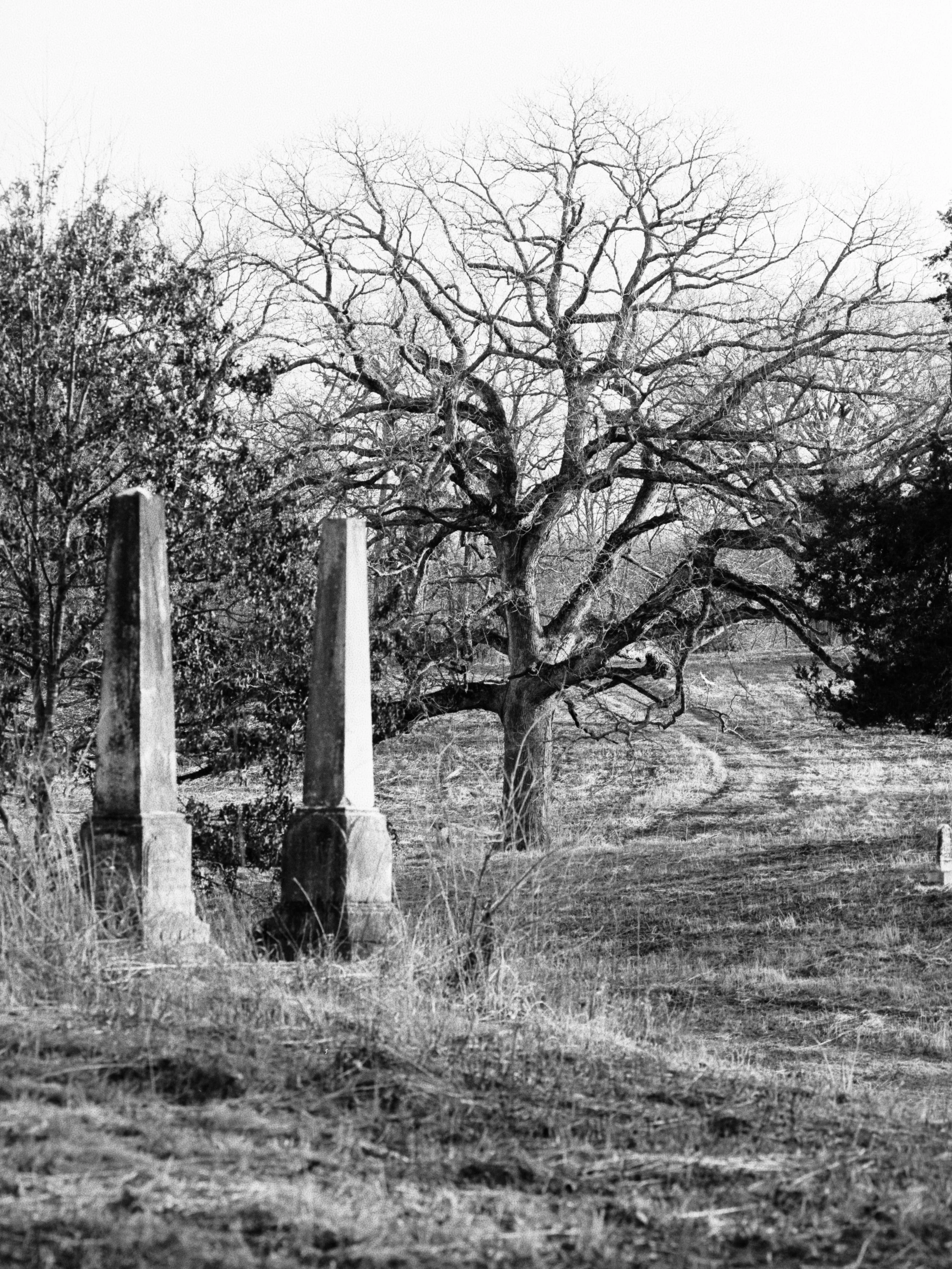
Two gravestones overlooking a mowed path through the cemetery
Those buried at Rochester Cemetery now safeguard the remnants of an ecosystem that they destroyed. A place that humans have designated for the dead has inadvertently become one of a handful of Iowa prairies that is still mostly alive. Conservationists clash with those who are only interested in Rochester Cemetery for its intended purpose: a graveyard. The agreed-upon management strategy, accepted by all and loved by none, is occasional mowing. The prairie remains in coexistence with the graveyard, and it also continues to be unburned for decades.
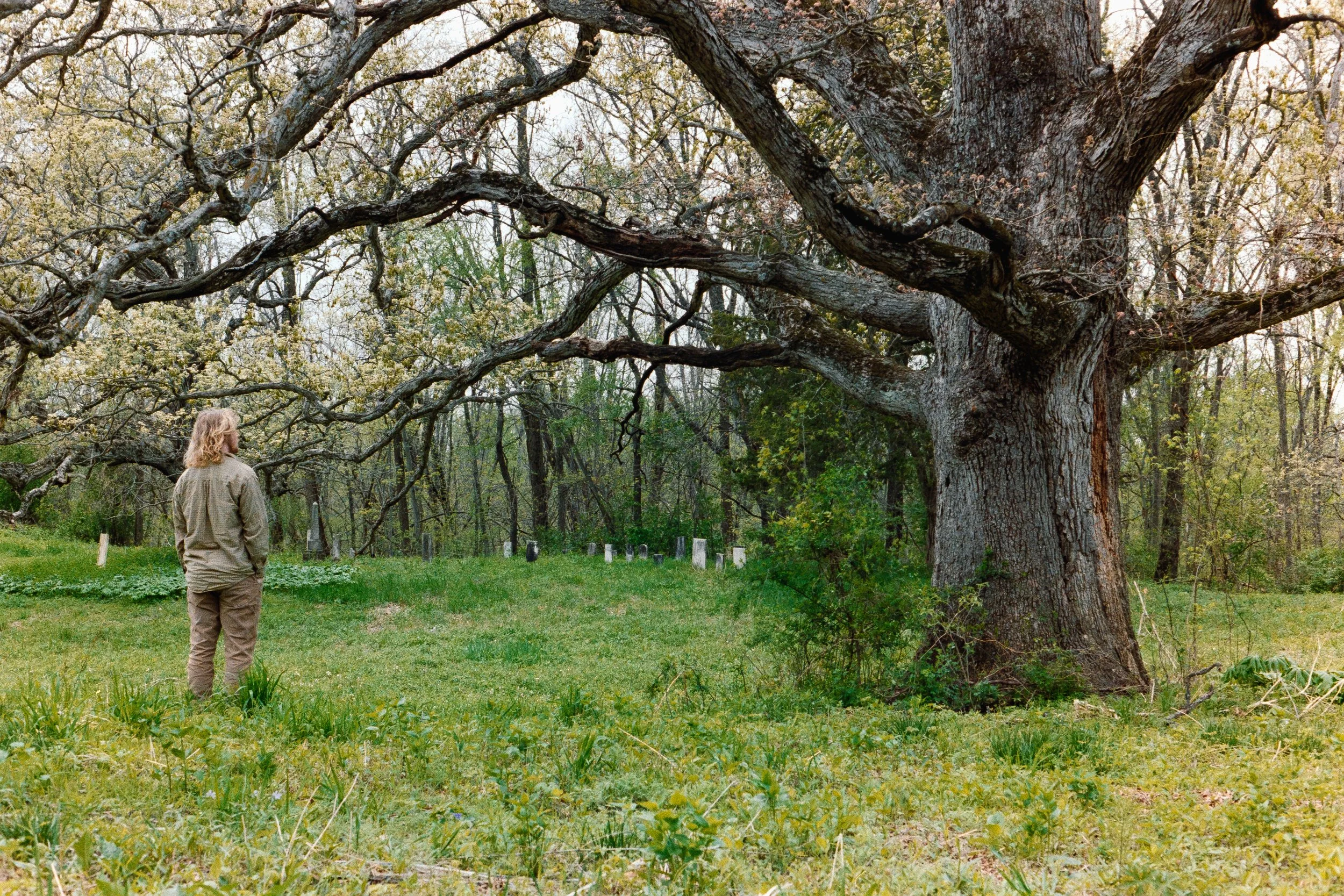
Standing underneath my favorite oak at Rochester Cemetery
When I visit Rochester Cemetery, I am filled to bursting with a melancholic and wistful longing for an Iowa that I’ll never know. If I could go back in time, pre-colonial Iowa is the first place I would visit. Living in the present, I love the trees and the flowers that I can see and smell. When faced with oaks like the ones here, it’s impossible for even the most devout industrialist to not revert to a tree-hugger. In addition to my wistfulness for an Iowa lost and an appreciation for a fragment of the old Iowa now present, I resent those smooth and nameless gravestones. The people who didn’t appreciate the landscape that they saw destroyed and ruined it for those who appreciate it but never got to see it. When I see once-clear prairie streams now warm, sluggish, and brown, I first and primarily blame big agribusinesses, but I also resent those who took the first steps down the path leading to our current situation.
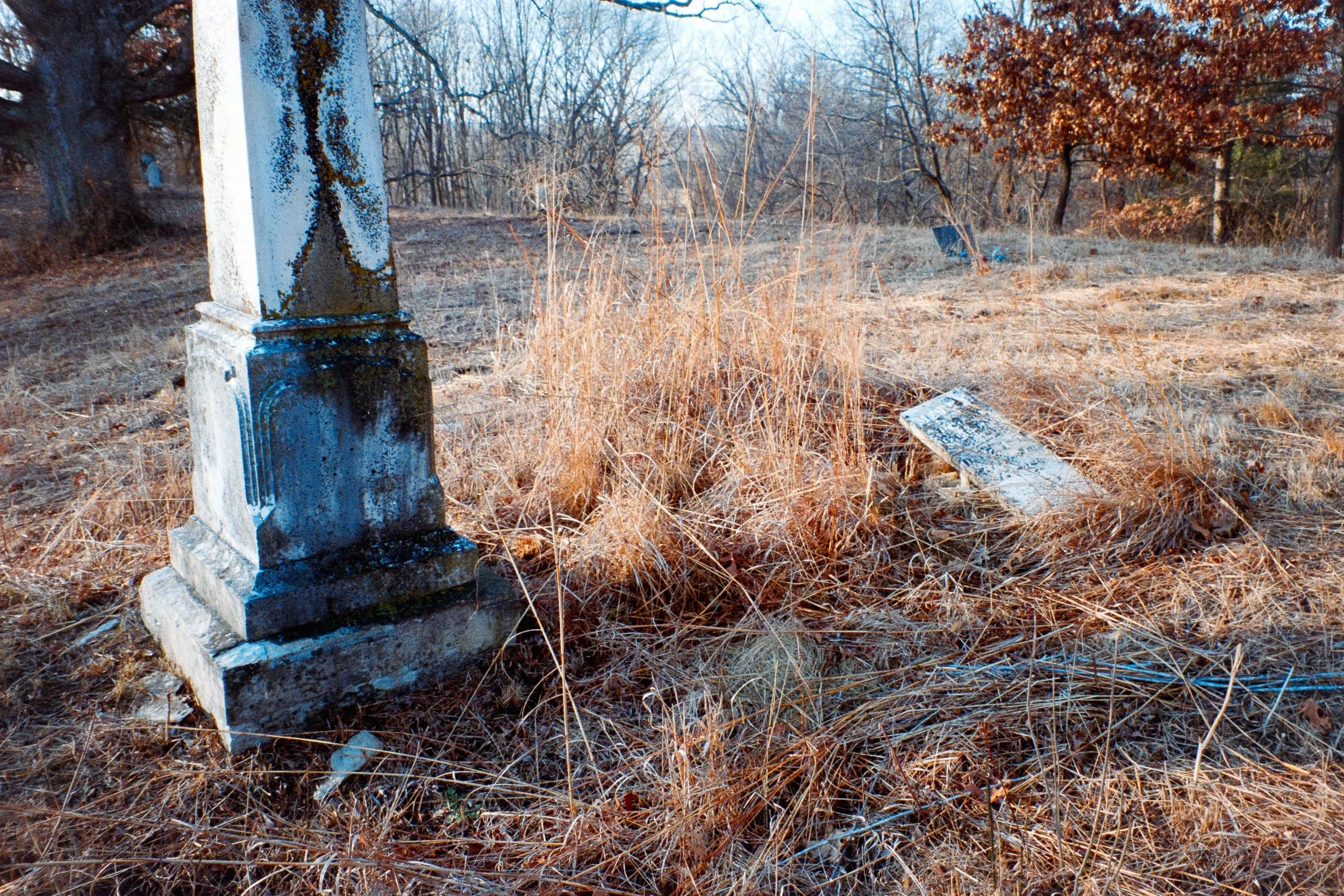
Unkempt gravestones and unmowed prairie grasses
When looking at Iowa’s current environmental problems, the symptoms are clear: undrinkable and unswimmable water statewide and a human cancer crisis. The cause is also clear: one-to-one replacement of all of Iowa’s tallgrass prairie with chemical-laden agriculture. Lastly, the solution: bring back the prairie. Re-replacing all of Iowa’s farm fields with grasslands isn’t realistic, but strategic prairie restoration certainly is. Using prairie restorations to rebuild our wetlands, buffer our waterways, and connect existing habitat would work wonders for Iowa.
Like other remnant prairies, Rochester Cemetery isn’t simply a memory of a nearly-extinct ecosystem. No, it’s a blueprint for the future, and a living library for the seeds of restoration. Remnant prairies inform us what prairie restorations should look like, and the plants they contain provide seeds to sew into future restorations. Perhaps it’s cliché, but Rochester Cemetery gives me hope. Rochester Cemetery tells us what Iowa is supposed to look like, and its seeds are the first step towards a world more like the one known by the nameless who are buried there.
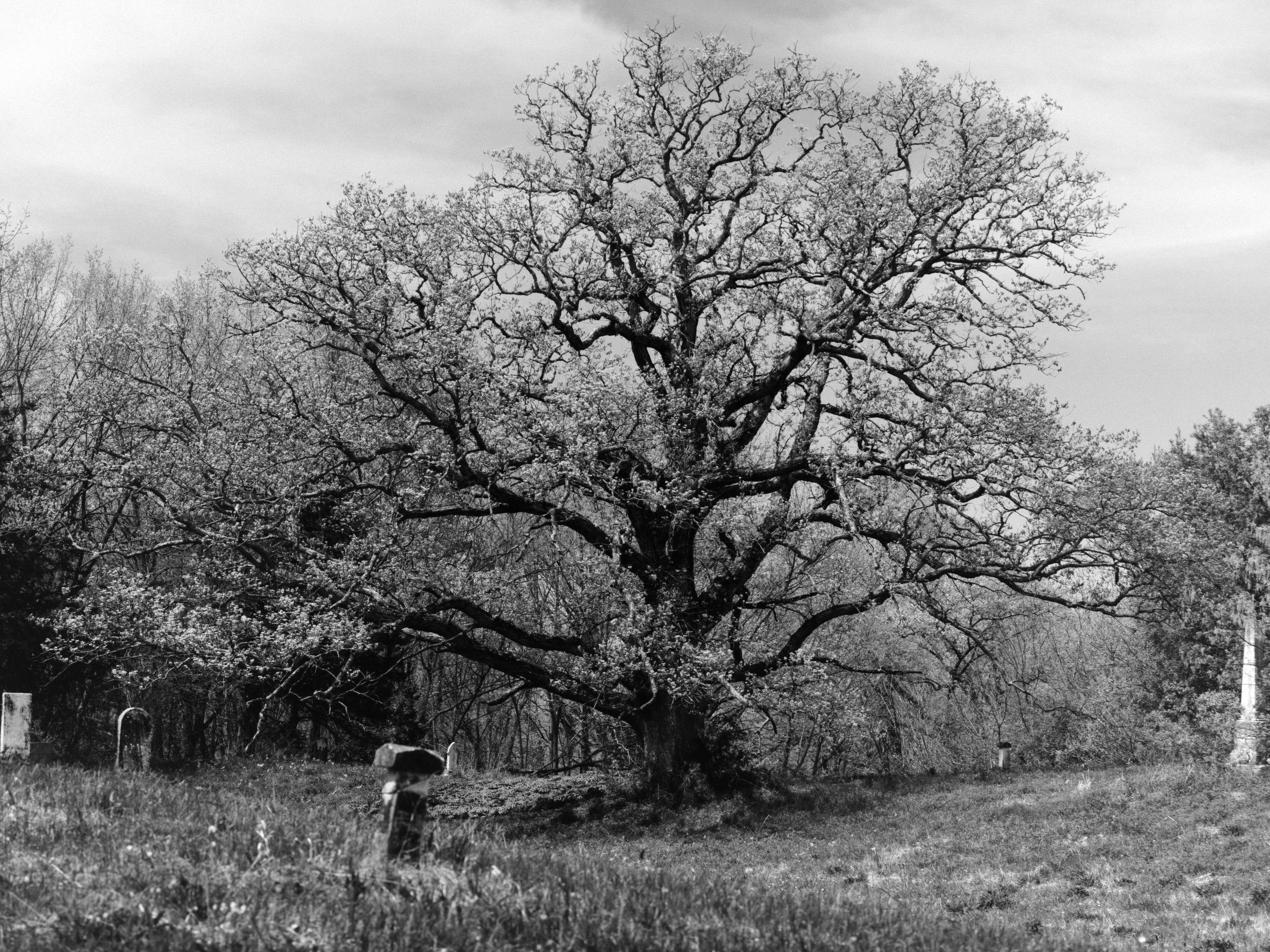
The white oak tree in the northwest corner of Rochester Cemetery
